
by AFAAS TEAM

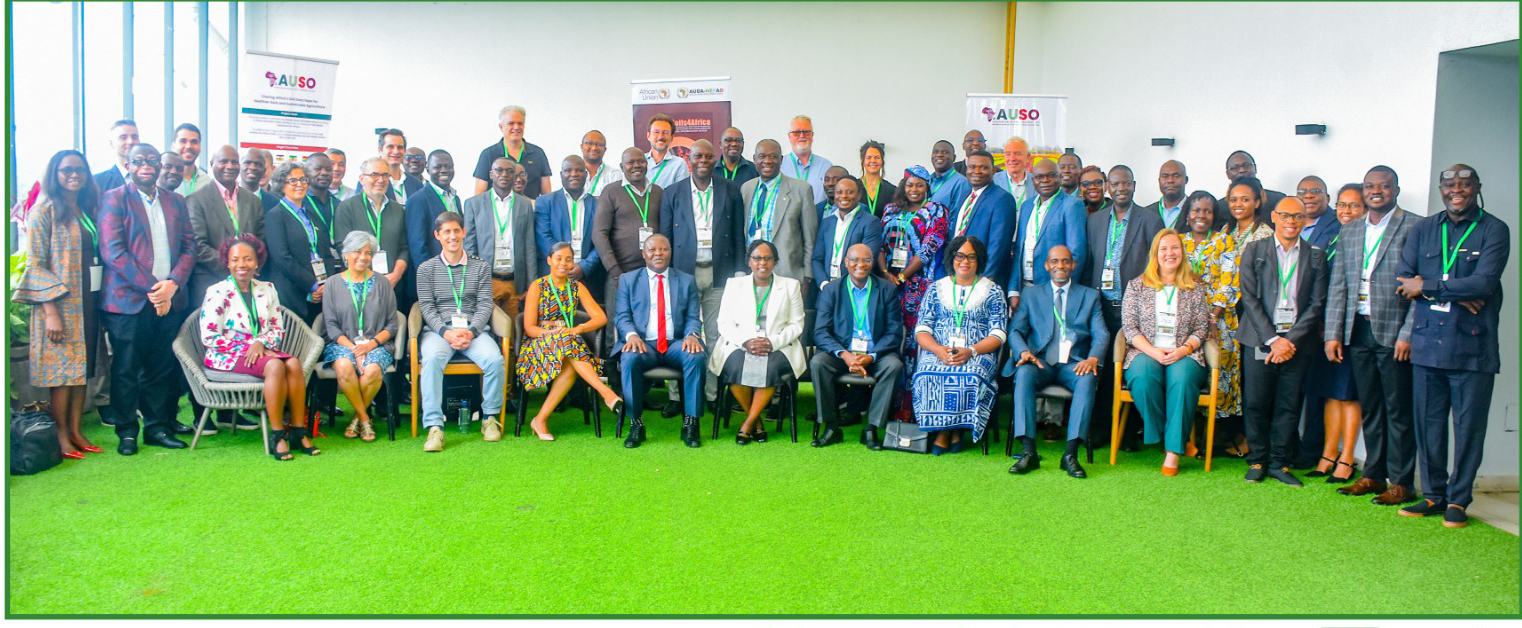
The African Union Soil Observatory (AUSO) continental partners have agreed to proactively work together during the project implementation phases in order to effectively impact and attain the project desired results and advance a strong commitment to the AUSO initiative and the pivotal role of soil data in advancing agricultural transformation. The commitments were sounded this morning by the heads and representatives of different partners at the high-level project launch and beginning of a three-day inception meeting held at trademark hotel in Nairobi.
The high-level event is being attended by African and European partners, policymakers, scientists, and development stakeholders, marks the start of a five-year Horizon Europe Innovation Action designed to generate robust, harmonized soil data and strengthen soil health management across the continent.
The AUSO project, funded by the European Union under Horizon Europe and coordinated by the Forum for Agricultural Research in Africa (FARA), will establish a continental soil observatory comprising the African Soil Data Centre (ASDAC) and an interactive Soil Health Dashboard. The platform will support continuous soil health monitoring, evidence-based policymaking, and targeted land management interventions across Africa.
Speakers from the African Union Commission, European Commission, EU Soil Mission Cluster, FARA, Kenya Agricultural and Livestock Research Organization (KALRO), ISRIC, and other key partners underscored the strategic importance of the AUSO Project. Across the board, they challenged partners to work towards open data, interoperability, and usability of soil information to support evidence-based policies and sustainable land management.
According to Dr Aggrey Agumya the Forum for Agriculture Research in Africa, Healthy soils are at the foundation of food security, climate resilience, and sustainable livelihoods.
“Through AUSO, we are building a collaborative, data-driven system that will empower African countries to design and implement effective soil health strategies.It is therefore important to know that we have started a journey towards ensuring advancement of soil data-based agricultural transformation,” adds Dr Aggrey Agumya.
According to the Dr Lilian Kidula Lihasi, the Executive Director of the African Forum for Agricultural Advisory Services (AFAAS), one of the main partners in the consortium implementing work package six, AUSO will go along way to enhance and strengthen informed agriculture extension systems in Africa.
“Partnerships will be a strong driver in achieving great mileage in AUSO implementation. We are already looking at working with partners like International Institute of Tropical Agriculture (IITA) and other partners who will be working with AFAAS across Africa.” Dr Lihasi kidula Lihasi.
In her presentation, the AFAAS Agricultural Extension Advisory Services Technical Lead, Dr. Rosemirta Birungi noted that this project looks forward to developing AUSO owned by AUC and managed by FARA, containing Africa Soil Data and the Interactive Africa Soil Health Dashboard implemented through seven working packages (7WPs).
“We are looking at having an open access hub which is an online infrastructure that enables people to acquire data either directly through repositories, strategies, studies or the dashboard which is a quick access to information,” said Birungi.
She added that this is all intended to provide evidence, as well as statistics on soil health in Africa so that there is a level of transparency and awareness on the quality of the soil that we have in Africa and how that can be utilized.
ABOUT:
The AUSO consortium brings together 21 African and European partners, including national agricultural research systems, universities, international research centers, and advisory services. Implementation will take place across 12 target countries—Cameroon, Cabo Verde, Central African Republic, Ethiopia, Ghana, Kenya, Malawi, Madagascar, Senegal, Zambia, Zimbabwe, and Morocco—with additional engagement across the continent.